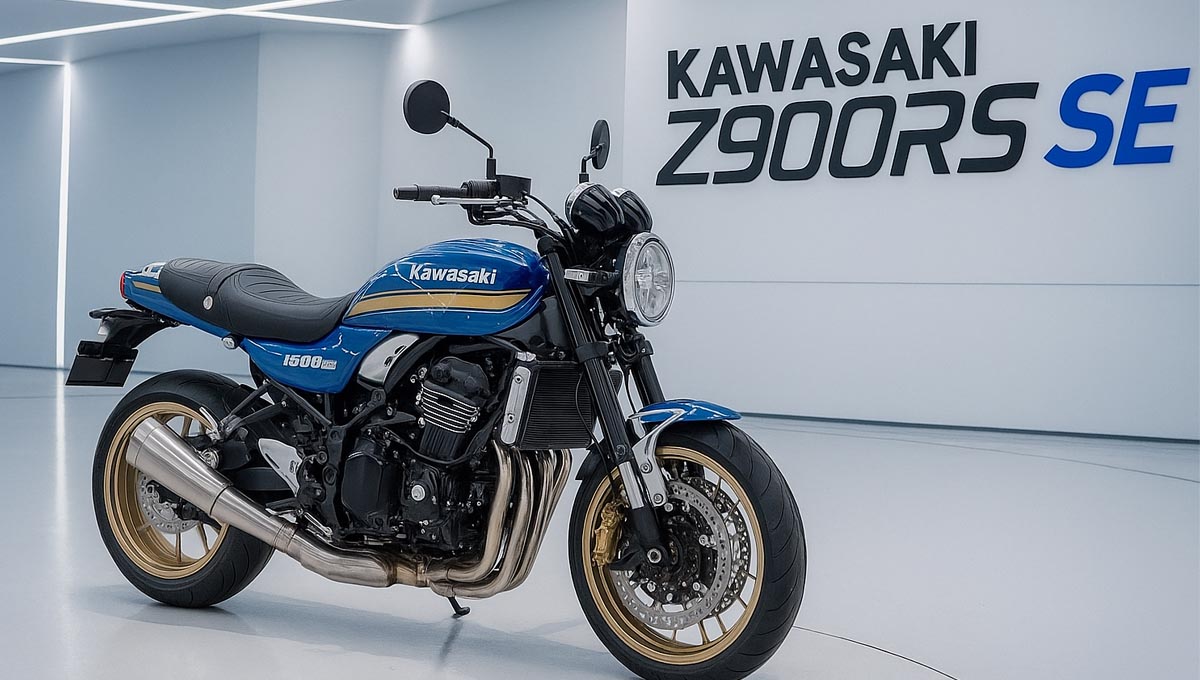
Kawasaki has once again redefined the term “modern classic” with the launch of the 2026 Kawasaki Z900RS. Long loved for its timeless Z1-inspired design, the RS has now received a massive technological overhaul that blends nostalgia with precision electronics. With features like a six-axis IMU, ride-by-wire throttle, electronic cruise control, and a bi-directional quickshifter, the new Z900RS bridges the gap between vintage appeal and cutting-edge performance.
The Soul of a Legend — Reborn for 2026
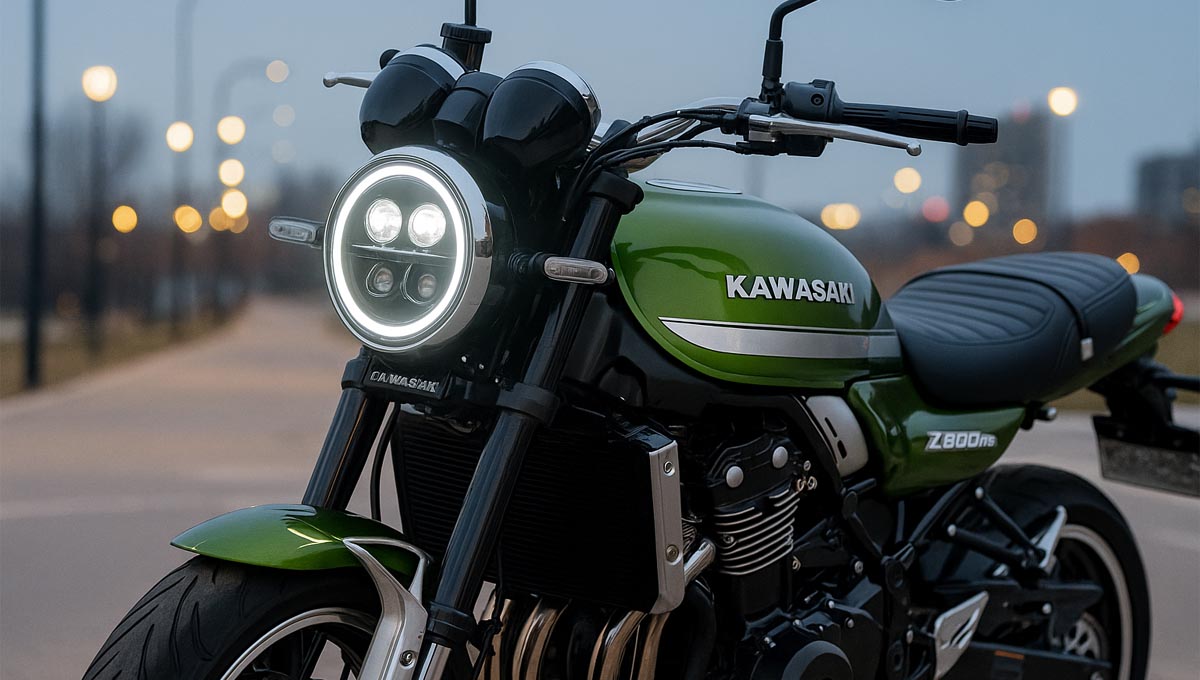
Ever since its debut, the Z900RS has been Kawasaki’s way of honoring the original 1972 Z1 Super Four the bike that defined an era. But while its retro tank lines, round LED headlamp, and twin-pod gauges preserve the nostalgia, the 2026 version hides some serious advancements underneath.
The new Z900RS isn’t just a facelift it’s a smarter, safer, and more refined motorcycle built for the next generation of riders who appreciate both style and substance.
What’s New in the 2026 Z900RS?
1. Six-Axis IMU: The Brain Behind the Ride
For the first time ever, the Z900RS gets a six-axis Inertial Measurement Unit (IMU) a small but powerful sensor that continuously monitors lean, pitch, and yaw. This allows the motorcycle to precisely control cornering ABS, traction control, and power delivery even when you’re leaned over in a corner.
In simple terms, the IMU ensures stability and confidence making aggressive cornering or sudden braking much safer and smoother.
2. Ride-by-Wire and Power Modes
Replacing the old cable throttle, the ride-by-wire system gives the Z900RS a more responsive and refined feel. It enables multiple riding modes, allowing riders to choose between sportier or relaxed throttle responses. It also supports the new electronic cruise control, making long highway stretches effortless.
3. Cruise Control: Long Rides Made Comfortable
For touring enthusiasts, Kawasaki’s addition of cruise control is a game-changer. It lets you lock in your speed and focus on the road without constantly twisting the throttle. On Indian highways or long weekend rides, this feature will be appreciated more than any cosmetic upgrade.
4. Bi-Directional Quickshifter
Now standard on the 2026 model, the bi-directional quickshifter allows clutchless upshifts and downshifts. Whether you’re slicing through traffic or attacking twisty roads, gear changes feel faster, smoother, and more intuitive.
Engine and Performance Smooth Power, Smarter Control
The 2026 Z900RS retains its 948cc inline-four engine, but Kawasaki engineers have re-tuned it for better mid-range torque and smoother low-speed manners.
Power Output: around 115 hp (depending on market)
Torque: approximately 98 Nm
Transmission: 6-speed with assist & slipper clutch
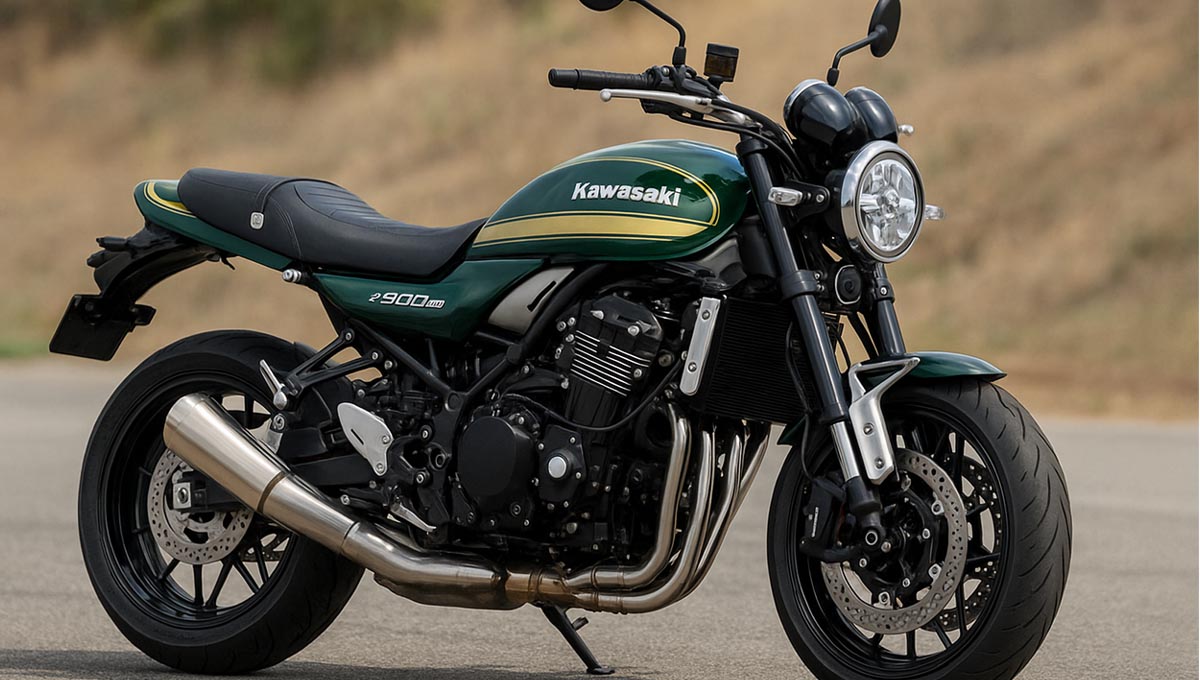
The revised gear ratios make city commuting more manageable while keeping highway performance intact. Kawasaki also redesigned the exhaust system now with a shorter megaphone muffler to improve both throttle response and that signature throaty exhaust note.
For riders searching “2026 Kawasaki Z900RS performance review” or “Z900RS 2026 engine specs”, this version is clearly tuned for real-world rideability, not just numbers on paper.
Chassis, Suspension & Braking — Classic Looks, Modern Control
Under its nostalgic bodywork, the Z900RS rides on a twin-spar steel frame derived from the Z900. The 41mm USD front fork and horizontal back-link rear shock are fully adjustable for preload and rebound.
The braking package includes:
Dual 300mm front discs with radial-mount calipers
Single 250mm rear disc
Kawasaki Cornering Management Function (KCMF) powered by IMU
The Z900RS SE variant raises the bar even higher with Brembo M4.32 front calipers and a premium Öhlins S46 rear shock.
Styling: Timeless Beauty with Subtle Refinement
Kawasaki has kept the classic silhouette intact — the teardrop tank, sculpted side panels, and chrome accents pay homage to the Z1. However, subtle updates include new color themes like Metallic Diablo Black, Candy Diamond Brown, and Emerald Green.
The dual-analog dials remain but now integrate a modern TFT display for additional information like gear position, fuel range, and riding mode giving you the best of both worlds.
For those Googling “2026 Kawasaki Z900RS retro design photos” or “Z900RS 2026 color options”, expect vibrant schemes with authentic old-school charm.
Comfort, Practicality & Touring Potential
Kawasaki has clearly aimed the 2026 Z900RS toward comfort as well as performance.
Seat height: 835 mm standard (with optional 810 mm low seat)
Ergonomics: Upright handlebar and mid-set pegs for relaxed touring posture
Fuel tank: 17 liters — ideal for long highway rides
Cruise control, a smooth clutch, and refined throttle mapping make this motorcycle suitable even for new riders who want premium performance without intimidation.
If you’re looking for “Z900RS 2026 touring review” or “best retro motorcycle for long rides”, this model now fits the bill perfectly.
Expected 2026 Kawasaki Z900RS Price & India Launch
While Kawasaki hasn’t officially announced the India launch timeline, sources suggest it could arrive in late 2025 or early 2026. Pricing is expected to hover around ₹13.5–₹14 lakh (ex-showroom) for the standard model and ₹15–₹15.5 lakh for the SE variant.
Given the added tech, the price bump is justified especially considering the inclusion of IMU, cruise control, and ride-by-wire electronics that were previously reserved for higher-segment models.
Also Read… | Honda CB1000 GT Leaked Before EICMA 2025 The New Touring Powerhouse from Honda
Conclusion
The 2026 Kawasaki Z900RS is more than a nostalgic nod to the past; it’s a statement of evolution. With safety tech like IMU-based cornering aids, real-world touring features like cruise control, and refined performance tuning, Kawasaki has delivered a bike that blends emotion, performance, and practicality like never before.
Buy it if:
You want a stylish, premium retro bike that you can actually tour on.
You crave a balance between heritage design and cutting-edge safety.
You’re looking for something unique — not just another naked sportbike.
The Z900RS 2026 proves that “retro” doesn’t have to mean “outdated.” It’s living proof that a motorcycle can honor its roots while racing confidently into the future.